Summary
San Francisco is internationally recognized for its distinctive Victorian architecture, a defining element of the city’s visual identity and cultural heritage. Built predominantly between 1850 and 1915 during the city’s rapid expansion following the Gold Rush, these Victorian homes showcase a range of architectural styles, including Gothic Revival, Italianate, Stick, Second Empire, Eastlake, and Queen Anne—the latter famously exemplified by the “Painted Ladies” row houses. Despite the destruction caused by the 1906 earthquake and fire, an estimated 13,000 to 15,000 Victorian residences remain, many of which have been carefully preserved or restored to reflect their original craftsmanship and vibrant color schemes.
Among the surviving homes, six Victorian houses currently for sale stand out as notable both for their architectural significance and cultural associations. These properties are situated in iconic San Francisco neighborhoods such as Pacific Heights, Haight-Ashbury, and Alamo Square, and include landmarks like the “Full House” house, the Mrs. Doubtfire house, and the Haas-Lilienthal House—a museum listed on the National Register of Historic Places. These homes attract a diverse range of buyers, from historic preservation enthusiasts to those seeking residences that blend period charm with modern livability.
The market for Victorian homes in San Francisco has experienced renewed interest in recent years, fueled in part by demographic shifts and changing housing preferences during the COVID-19 pandemic. Currently, about 67 Victorian homes are available for sale, typically priced around $1.29 million, with properties often receiving multiple offers and selling relatively quickly. Restoration efforts continue to play a crucial role in maintaining the architectural integrity and historical value of these homes, supported by local landmark designations and preservation ordinances that regulate alterations and encourage authenticity.
Despite their enduring appeal, Victorian homes in San Francisco face ongoing challenges related to preservation, modernization, and market demand. Balancing historic authenticity with contemporary needs requires thoughtful renovation and expert guidance, especially given the regulatory environment and the scarcity of these historic properties. The six must-see Victorian houses currently for sale exemplify the city’s rich architectural legacy and highlight the continued cultural and real estate significance of Victorian architecture in San Francisco today.
Victorian Architecture in San Francisco
San Francisco is renowned worldwide for its distinctive Victorian architecture, which significantly contributes to the city’s unique character and charm. This architectural style flourished during the Victorian and Edwardian periods, roughly between 1849 and 1915, a time that coincided with the city’s rapid growth and prosperity following the Gold Rush. An estimated 48,000 Victorian houses were built in San Francisco during this era, many of which were lost to the devastating 1906 earthquake and fire, but numerous iconic examples still stand today, reflecting a rich variety of styles.
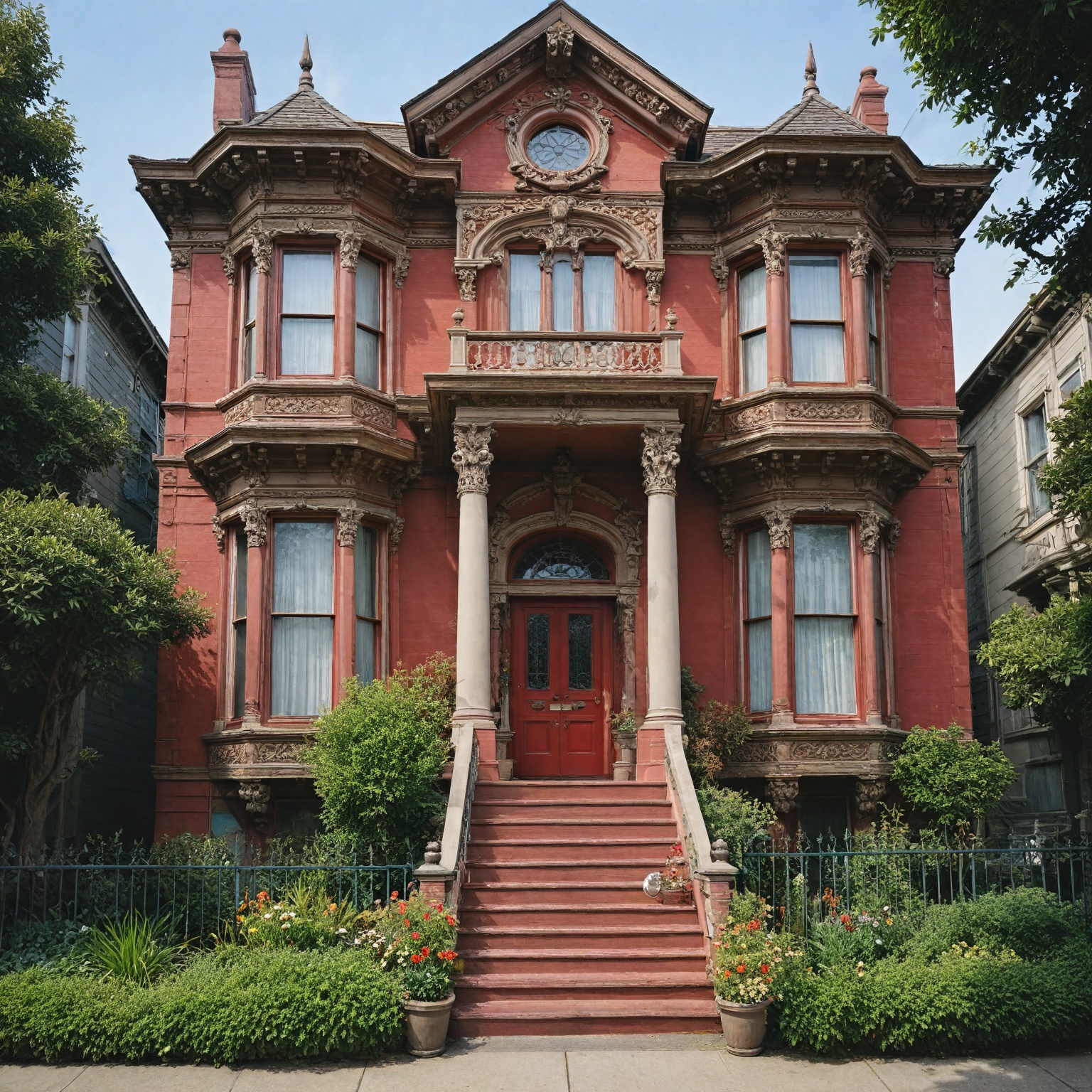
The Victorian homes of San Francisco encompass a broad spectrum of architectural styles, including Gothic Revival, Italianate, Stick, Second Empire, Eastlake, and the Queen Anne style—the latter being especially popular in the city’s famed “Painted Ladies” row houses. These houses often feature elaborate decorative trim, ornate woodwork, and distinctive design elements such as bay windows, which became prevalent as homeowners sought to maximize interior space on smaller urban lots. The intricate craftsmanship and vivid multi-color paint schemes—popularized in the 1978 book Painted Ladies: San Francisco’s Resplendent Victorians—have become synonymous with the city’s aesthetic identity.
Architectural landmarks like the Nightingale House, built in 1882, showcase a blend of Eastlake, Carpenter Gothic, Second Empire, and Italian Villa influences, designed by architect John Marquis. Other notable examples include the Audiffred Building, a Second Empire-style structure with a cast-iron façade that survived the 1906 disaster, and the Atherton House, which combines Queen Anne and Stick-Eastlake styles with unique horizontal lines and a clipped gable. The Inn San Francisco, originally a 27-room Italianate mansion constructed in 1872, highlights the grandeur of “Mansion Row” and serves today as a bed and breakfast steeped in history.
Victorian architecture in San Francisco not only reflects the artistic trends of its era but also symbolizes the innovation, creativity, and individualism that have long defined the city’s spirit. Many of these homes have undergone careful restoration efforts, blending historic details with modern living needs while preserving authenticity. For example, restoration projects often seek to maintain period-specific wallpapers, traditional cabinetry, and original staircases, creating a living museum experience that connects contemporary residents and visitors with the city’s past.
Today, Victorian homes remain a celebrated part of San Francisco’s urban landscape, drawing enthusiasts, historians, and prospective homeowners alike. Their continued preservation and adaptive reuse underscore the enduring appeal of Victorian architecture as an essential element of the city’s cultural and architectural heritage.
Historical and Cultural Significance
Victorian architecture holds a pivotal place in San Francisco’s identity, symbolizing the city’s rapid growth and prosperity during the Gold Rush era. These historic homes reflect the spirit of innovation, creativity, and individualism associated with San Francisco and contribute significantly to its unique character, which residents and visitors alike deeply appreciate. The preservation of these buildings allows for a tangible connection to the past, offering insights into the location, distribution, and importance of the city’s historic resources.
The Victorian renaissance in San Francisco during the 1970s marked a departure from traditional restoration methods, blending historic design with modern modifications tailored for contemporary living. Many restorations acted as time capsules, preserving layers of window treatments, elaborate wallpapers, and period antiques that capture the 19th-century ambiance. This approach safeguarded important cultural narratives, such as the stories of immigrant communities that helped shape the city’s development.
Notable examples like the Russell Warren House and the Queen Anne-style homes in the Haight-Ashbury district showcase the architectural diversity and craftsmanship of the Victorian era. These homes embody styles influenced by the Gothic Revival and enhanced by the industrial revolution, which enabled mass production of ornate decorative elements, making intricate design accessible to a broader population. The authenticity of these restorations is valued by the public, who often appreciate seeing Victorians restored to their original period appearance rather than altered with modern, vibrant colors.
The preservation and designation of such properties as San Francisco Landmarks have been integral to city planning since 1967, helping protect these historic structures from inappropriate alterations. As of June 2024, there are over 300 designated landmarks, many of which include Victorian homes that continue to define San Francisco’s architectural landscape. Despite a significant reduction from the estimated 50,000 Victorian houses originally built between 1850 and 1915 to about 13,000 to 15,000 remaining today, these homes remain a cherished and celebrated part of the city’s heritage, often featured in tours and real estate listings that highlight their enduring appeal.
Overview of the Six Must-See Victorian Houses Currently for Sale
Among the approximately 13,000 to 15,000 remaining Victorian homes in San Francisco, six currently for sale stand out as must-see properties for enthusiasts and prospective buyers alike. These homes are located in some of San Francisco’s most iconic neighborhoods, including the famed Steiner Street corridor between Grove and Hayes Streets, and the Pacific Heights area. Many are noted not only for their classic Victorian architectural features but also for their cultural significance, with some linked to popular media, such as the house featured in the TV show Full House and the Mrs. Doubtfire house at 2640 Steiner Street.
The market for Victorian homes in San Francisco has experienced renewed interest recently, especially as younger homeowners and restoration enthusiasts undertake more thoughtful preservation and renovation projects. This trend was further accelerated by the Covid-19 pandemic, which saw increased demand for single-family homes with more personal space within the city. Currently, there are 67 Victorian homes for sale in San Francisco, with a median listing price of approximately $1.29 million. These homes typically spend about 34 days on the market and often receive multiple offers, reflecting strong buyer interest.
Each of the six featured homes offers unique characteristics, including access to serene outdoor spaces like shared gardens and additional storage, making them not only architecturally significant but also highly livable in today’s urban environment. Prospective buyers can filter listings by price, size, and other preferences to find a Victorian home that fits their criteria, supported by local real estate experts familiar with the historic market.
Detailed Profiles of Each Featured House
The Full House House
Located at 1709 Broderick Street, this Victorian residence gained fame as the iconic “Full House” house recognizable by its formerly red door, though the door has since been repainted and altered. While the exterior appearance has changed slightly over time, the house remains a beloved symbol of San Francisco’s television heritage.
The Mrs. Doubtfire House
Situated at 2640 Steiner Street in the upscale Pacific Heights neighborhood, the Mrs. Doubtfire House is well known for its role in the popular film. Another Victorian home at 2311 Broadway was also featured in the TV series Party of Five, underscoring the neighborhood’s association with screen history.
The Haas-Lilienthal House
This grand Queen Anne-style mansion, designed by architect Peter R. Schmidt and built in 1886, stands at 2007 Franklin Street. Originally the home of Jewish immigrants William and Bertha Haas, the 11,500 square foot house embodies the ambitious spirit of San Francisco’s pioneers and is an important cultural and architectural landmark. It operates today as a museum, providing visitors with insight into Victorian life in the late 19th century. The Haas-Lilienthal House is listed on the National Register of Historic Places, designated as San Francisco Landmark #69, and was named a National Treasure by the National Trust for Historic Preservation in 2012.
The Abner Phelps House
Constructed circa 1850-1851, the Abner Phelps House holds the distinction of being one of the oldest unaltered residences in San Francisco. Located at 1111 Oak Street in the Haight Ashbury district, it is built in the Gothic Revival style—an architectural choice intended to comfort Phelps’ wife, who was homesick for Louisiana. The house was designated a San Francisco landmark in 1970 and is notable for standing out amid the city’s many Victorian structures due to its unique style and historical significance.
The Sarah Mish House
Neighboring the Abner Phelps House at 1153 Oak Street, the Sarah Mish House was built in 1885 for the Mish family. This residence is a beautiful example of the Stick-Eastlake architectural style combined with Queen Anne influences, a common design language throughout San Francisco. Its ornate details and well-preserved façade contribute to its standing as an architectural treasure within the city’s Victorian heritage.
The William Westerfeld House
Located at the corner of Fulton and Scott Streets near Alamo Square Park, the William Westerfeld House is a striking 12-bedroom Victorian mansion famous for its tower and commanding city views. Built in 1889 by architect Henry Geilfuss for German confectioner William Westerfeld, the home has changed hands multiple times, including ownership by John Mahony, a key figure in San Francisco’s rebuilding after the 1906 earthquake. This Victorian mansion, often affectionately called the “Russian Embassy,” is emblematic of San Francisco’s grand architectural legacy from the Victorian era.
These six houses collectively showcase a rich variety of Victorian styles—from Gothic Revival to Stick-Eastlake and Queen Anne—each with its own unique historical background and architectural significance, making them some of the most sought-after and celebrated properties in San Francisco today.
Neighborhoods with Notable Victorian Houses for Sale
San Francisco is renowned for its abundance of Victorian-style homes, many located in several distinct neighborhoods known for their architectural heritage and historical significance.
Mission District
The Mission District hosts a variety of Victorian residences characterized by distinct design elements such as bay windows. Among these is the Sarah Mish House at 1153 Oak Street, built in 1885 and featuring a combination of Stick-Eastlake and Queen Anne architectural styles. The neighborhood’s Victorian homes contribute significantly to the Mission District’s architectural diversity.
Noe Valley
Noe Valley boasts one of the highest concentrations of row houses in San Francisco, with some streets featuring three to a dozen homes on the same side. The neighborhood contains many examples of classic Victorian and Edwardian residential architecture. While Italianate Victorian styles began supplanting Gothic styles by the 1860s, Noe Valley’s working-class roots led to rows of efficient, low-cost homes that vary in ornateness depending on the original owner’s preferences and finances.
Alamo Square
Alamo Square is perhaps the most iconic neighborhood associated with Victorian homes in San Francisco. The eastern side of Alamo Square Park features the famous “Painted Ladies,” also known as “Postcard Row,” a row of colorful Victorian houses built in the 1890s. Their distinctive vibrant color schemes were added in the 1960s by artist Butch Kardum, enhancing their status as one of the most photographed sights in the city. Nearby, the William Westerfeld House contributes to the neighborhood’s historic charm.
Other Neighborhoods
In addition to these, Victorian homes are also prominent in neighborhoods such as The Castro, Noe Valley, Pacific Heights, Nob Hill, and Haight Ashbury. The Portrero Hill neighborhood contains the house featured in the film Pacific Heights, located at 19th Street and Texas Street. These neighborhoods offer a rich variety of Victorian homes available for sale, often with preservation efforts guided by local Victorian preservation societies to maintain their distinctive architectural details.
Together, these neighborhoods offer a diverse and attractive range of Victorian homes for those interested in San Francisco’s architectural heritage and real estate market.
Designations and Historic Districts
San Francisco has a robust system for recognizing and preserving its historic properties, many of which have achieved recognition at the federal level through inclusion on the National Register of Historic Places or designation as National Historic Landmarks. Since 1972, the city has also established thirteen local landmark districts, which vary in size from a handful of buildings to several hundred properties, further protecting the architectural and cultural heritage of the area.
The local landmarks and historic districts in San Francisco are primarily governed by Article 10 of the San Francisco Planning Code. To date, there are over 300 designated Article 10 Landmarks and more than 1,110 lots within the city’s Article 10 Historic Districts. These designations provide additional layers of protection beyond federal recognition. Additionally, there are over 120 buildings individually listed in the National Register, along with 24 National Register Historic Districts within the city. The California Office of Historic Preservation Resources maintains a comprehensive listing that includes all National Register properties as well as those designated under Articles 10 and 11, encompassing buildings, structures, or objects deemed significant to California’s history. Over 3,300 parcels in San Francisco are listed or eligible for listing in the California Register.
Beyond Article 10 landmarks, Conservation Districts located in San Francisco’s downtown core are regulated under Article 11 of the Planning Code. These districts offer further oversight to maintain the architectural integrity and historic character of important areas within the city.
Owners of designated landmark properties or contributing buildings within historic districts may benefit from property tax relief programs such as the Mills Act, alongside other incentives aimed at promoting preservation. These measures are supported by detailed guidelines provided in the city’s Preservation Bulletins.
Preservation and Restoration
San Francisco’s Victorian houses are not only architectural treasures but also vital components of the city’s unique character, which relies heavily on preserving historically and culturally significant properties as part of broader city planning efforts. The restoration and preservation of these homes involve meticulous attention to detail and often a fusion of historic and modern design elements, adapted for contemporary living.
Owners of landmark properties or buildings within historic districts in San Francisco may qualify for property tax relief under the Mills Act and other incentives designed to encourage preservation. These properties are regulated under local ordinances such as Article 10 of the San Francisco Planning Code, which governs alterations, demolitions, and new construction through a review process involving Certificates of Appropriateness (COA) or Administrative Certificates of Appro
Architectural and Historical Features Attracting Buyers
San Francisco’s Victorian houses are celebrated for their distinct architectural styles and rich historical significance, making them highly desirable to homebuyers seeking unique properties with character. These homes often feature ornate details and design elements that reflect various Victorian-era influences, which continue to captivate residents and visitors alike.
A defining characteristic commonly seen throughout many Victorian homes in the city, especially in neighborhoods like the Mission District, is the use of bay windows. These windows were originally introduced as a clever way to increase interior space on smaller lots while adding aesthetic appeal. The colorful facades and intricate woodwork on these windows enhance the homes’ charm and historic authenticity.
Victorian properties frequently showcase preserved period details such as high ceilings, inlaid hardwood floors, wainscoting, and vintage architectural accents. For example, some top-tier Victorian penthouses boast 10 to 11-foot ceilings and restored 19th-century bathrooms, maintaining the elegance of their original design while offering modern comforts. The fusion of historic craftsmanship with thoughtful restoration appeals to buyers who appreciate both authenticity and livability.
The homes’ exteriors are often meticulously maintained to reflect their original Victorian paint palettes and intricate trim, guided by local preservation societies that enforce historic accuracy. This commitment to authenticity extends to hardware choices and other decorative elements, ensuring the homes retain their distinctive period character. While the iconic Painted Ladies are the most famous example, many other Victorian homes in San Francisco similarly enjoy a blend of historic charm and modern upgrades that appeal to discerning buyers.
Moreover, these homes carry significant historical value, having been part of San Francisco’s landscape for over a century, with some properties remaining in the same family for decades. Such deep-rooted history adds to their allure, offering a tangible connection to the city’s past alongside the benefits of contemporary urban living. This combination of historical importance, architectural beauty, and practical modernization continues to drive strong interest in Victorian homes within San Francisco’s competitive real estate market.
Market Trends and Considerations for Buyers
The market for Victorian homes in San Francisco has experienced notable shifts in recent years, particularly influenced by the Covid-19 pandemic. While the overall real estate activity in urban centers like San Francisco slowed during the outbreak, there was a significant increase in demand for single-family Victorian homes. Many residents, opting to remain within the city, sought to move out of apartments into properties that offer more personal space, contributing to this spike in interest.
Currently, there are approximately 67 Victorian homes for sale in San Francisco, with a median listing price around $1.29 million. These homes tend to move relatively quickly, typically remaining on the market for about 34 days and attracting an average of three offers. Prospective buyers often find that the properties feature desirable amenities, such as shared outdoor spaces and additional storage, which enhance the living experience and contribute to their appeal.
Younger homeowners are increasingly driving thoughtful and considerate restoration efforts on Victorian properties. This new wave of buyers is eager to learn about the history and details of their homes, often engaging deeply with the restoration process to maintain the architectural integrity and character of these historic structures. The material versatility of Victorian-era building materials also aids in preserving the intricate flourishes that define these homes.
When considering a Victorian home purchase, buyers should recognize that although many original Victorian structures have been lost, an estimated 13,000 to 15,000 remain in San Francisco out of the approximately 50,000 built between 1850 and 1915. These homes hold significant historical value and are often subject to preservation guidelines that can influence renovation possibilities and maintenance requirements. Additionally, while the definition of a Victorian home can vary, the consensus is that homes built during Queen Victoria’s reign qualify under this category, encompassing a range of sub-styles and architectural nuances.
Given these factors, buyers interested in San Francisco Victorian homes benefit from working with local real estate experts who can provide insights into the unique aspects of these properties and the neighborhoods in which they reside. The current market dynamics and the renewed appreciation for historic preservation make this an opportune time for thoughtful investment in Victorian homes.
The content is provided by Harper Eastwood, Brick By Brick News