Summary
Discover the Hidden Charms of These 7 Charming Newfoundland Small Towns showcases the unique appeal of Newfoundland and Labrador’s quaint coastal communities. Renowned for their rich history, vibrant cultures, and stunning natural landscapes, these small towns offer travelers an authentic and immersive experience away from typical tourist routes. From picturesque fishing villages and resettled communities to historically significant sites, Newfoundland’s small towns collectively embody the province’s enduring maritime heritage and welcoming spirit.
Each town featured in this collection highlights distinctive features—such as the colorful architecture reflecting English, Irish, and Welsh immigrant roots, vibrant local traditions, and connections to Indigenous histories including those of the Beothuk, Innu, and Mi’kmaq peoples. Many of these communities preserve centuries-old stories tied to early European exploration, including Norse and Basque presence, which are commemorated through archaeological sites and UNESCO World Heritage designations. At the same time, these towns continue to evolve economically, balancing traditional fisheries with a growing tourism industry that celebrates both natural phenomena, like iceberg viewing in Twillingate, and cultural events such as the Bonavista Biennale.
While these towns are cherished for their charm and hospitality, some face challenges related to economic transition and rural depopulation. Nevertheless, conservation and preservation efforts remain strong, focusing on safeguarding historic architecture, natural landscapes, and intangible cultural heritage. Initiatives like the maintenance of living history museums, memorials to maritime tragedies, and biennial art exhibitions underscore the communities’ commitment to honoring their past while fostering sustainable tourism and local pride.
This article invites readers to explore the hidden gems of Newfoundland’s small towns, offering a blend of scenic beauty, cultural richness, and historical depth. Whether seeking outdoor adventure, artistic inspiration, or a genuine connection to Newfoundland’s heritage, visitors can discover a side of the province that is both timeless and evolving, shaped by its people and place.
Overview of Newfoundland’s Small Towns
Newfoundland’s small towns offer a slower, more meaningful travel experience, characterized by rich history, friendly locals, and stunning natural scenery. These communities range from quaint villages and hamlets to coves, each with its own unique charm and stories waiting to be discovered. The area along Route 320, known as “The Road To The Shore,” exemplifies the province’s picturesque small towns, featuring lovely scenery and quaint communities like Greenspond, a small island connected by a causeway with a scenic walking trail that circles the island.
Many of these towns have deep historical roots. Some are home to preserved architecture reflecting the heritage of English, Irish, and Welsh immigrants, with brightly colored homes lining narrow, winding streets reminiscent of their ancestral villages. Others preserve and interpret the legacy of indigenous peoples, such as the Beothuk, whose culture is commemorated at a site featuring an interpretation centre, multimedia exhibits, and walking trails to archaeological digs that reveal how they thrived on the land’s rich resources.
The historical significance of Newfoundland’s small towns is also marked by connections to early European exploration and industry. The Basque mariners, who arrived around 1520 for whaling opportunities, are celebrated through UNESCO World Heritage and National Historic Sites that highlight this nearly forgotten cultural link, rediscovered in the 1970s through archival research.
Economically, many towns have transitioned over time. While fishing—particularly crab fishing—remains an important sector, some towns have seen a decline in their roles as ports due to increased land transportation. Nevertheless, tourism is a growing industry, fueled by the abundance of historical sites, natural wonders, and cultural events such as the Bonavista Biennale, a biennial international exhibition of contemporary visual art that transforms the landscape and historic buildings throughout the area.
For travelers interested in exploring beyond the usual destinations, Newfoundland also offers numerous resettled communities, abandoned buildings, aircraft crash sites, and ghost towns, providing a deeper, off-the-beaten-path experience of the province’s rich and varied history. Collectively, these small towns represent a unique and inviting aspect of Newfoundland, making them ideal for those seeking charm, culture, and connection in their travels.
Conche
Conche is a picturesque small town nestled along Newfoundland’s French Coast, celebrated for its charming small-town atmosphere and rich local history. A highlight of the town is its interpretation centre, which houses a remarkable 227-foot hand-stitched tapestry that vividly illustrates the region’s history, providing visitors with an immersive cultural experience. The town’s warm hospitality is evident in local traditions such as the “scoff and a scuff,” where visitors are invited to share food and stories with residents, offering an authentic glimpse into community life.
Originally known as Passage Harbour, the area was later mistakenly referred to as Comby Chance in a 1706 dispatch by Major Lloyd, who confused the town’s name with that of the river flowing through it, Come By Chance. Today, Conche stands as one of the many charming Newfoundland communities that continue to attract travelers seeking both historical insight and a welcoming atmosphere.
Unnamed Small Fishing Village near St. John’s
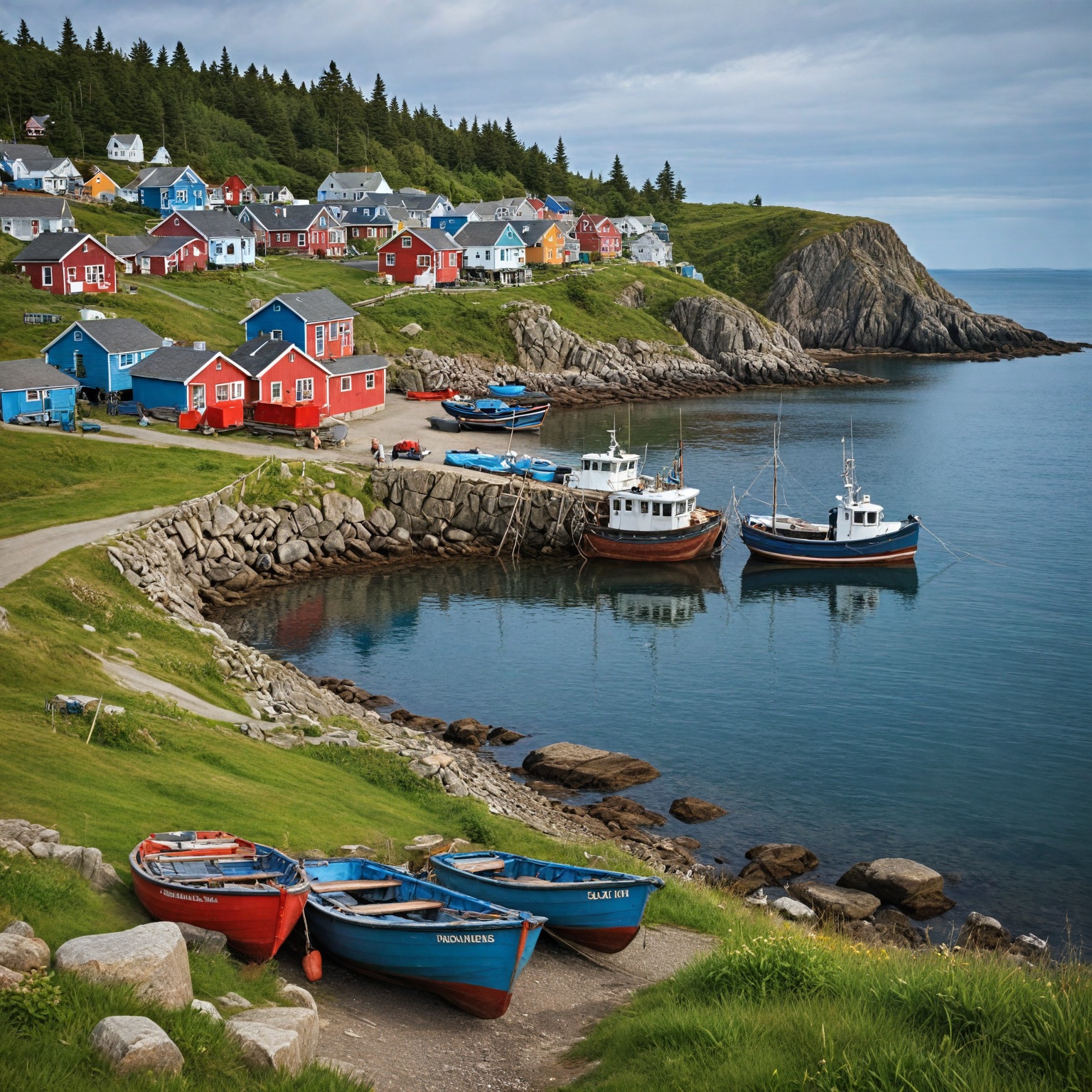
This picturesque small fishing village, located just 16 minutes from St. John’s, offers a perfect escape from the bustling city life into a charming and vibrant community. Known as a photographer’s paradise, the village is characterized by its narrow lanes and winding streets that evoke the feel of English, Irish, and Welsh villages. The architectural styles of the homes reflect the diverse immigrant origins of its residents, with many brightly coloured houses along the central streets preserved to maintain their historic charm.
Historically, the village expanded down the hillside after the construction of a break wall, which was built to prevent flooding, allowing houses to safely extend closer to the waterfront. Today, this small fishing community is recognized for its dynamic character and strong ties to its cultural roots, providing visitors a unique blend of history and natural beauty just a short distance from the provincial capital.
St. John’s
St. John’s, the capital city of Newfoundland and Labrador, is a vibrant and picturesque coastal city located on the easternmost tip of Canada. Known as one of North America’s oldest cities, with a history dating back to the early 16th century, St. John’s boasts a captivating blend of history, culture, and stunning natural beauty.
The city’s most iconic feature is its colorful row houses, famously referred to as “Jellybean Row,” which brighten the city’s hilly streets and contribute to its welcoming atmosphere. The historic downtown area serves as a testament to St. John’s centuries-old heritage, featuring well-preserved architecture, cobblestone streets, and notable landmarks such as the Basilica of St. John’s. Another significant historic site is Cabot Tower, where visitors can learn about the city’s crucial role in military communications and defense, and enjoy panoramic views of the Atlantic Ocean, the harbor, and the city itself.
St. John’s is renowned for its lively arts and music scene. George Street, located in the heart of downtown, transforms into a bustling entertainment district, closed to traffic for 20 hours daily to accommodate vibrant nightlife and festivities. The George Street Festival is a prominent event that draws locals and tourists alike, turning the street into a dynamic hub of music and cultural celebration. Additionally, the city hosts numerous festivals and cultural events throughout the year, celebrating Newfoundland and Labrador’s unique heritage.
As the provincial capital, St. John’s functions as a central hub for government, education, and healthcare within Newfoundland and Labrador. The city also features important cultural institutions such as The Rooms, which combines a museum, art gallery, and archives, making it the province’s premier cultural facility. For large sporting and concert events, residents and visitors often gather at Mile One Stadium, a key venue within the city.
Twillingate
Twillingate, often called the “Iceberg Capital of the World,” is a picturesque coastal town situated on Twillingate Island within Notre Dame Bay, Newfoundland and Labrador. Renowned for its breathtaking natural beauty and rich maritime culture, Twillingate offers visitors a unique glimpse into Newfoundland’s rugged coastline and vibrant fishing heritage.
The town is famous for its spectacular iceberg viewing opportunities. Each spring and early summer, massive icebergs drift along the coastline, creating a dramatic and awe-inspiring sight that attracts tourists worldwide. This phenomenon occurs due to the ocean corridor known as “Iceberg Alley,” which carries icebergs south from Greenland past the shores of Twillingate. Visitors can stroll along the rocky coastlines to watch these majestic ice formations float by or embark on guided iceberg and whale watching tours for a more immersive experience.
Historically, Twillingate was one of the busiest seaports in northern Newfoundland during the 1800s, reflecting its longstanding importance in the region’s fishing industry and maritime trade. Today, the town retains much of its old-world charm through its quaint streets and vibrant local culture, making it a popular destination for those seeking to experience authentic Newfoundland life.
In addition to iceberg watching, Twillingate’s surrounding landscapes offer numerous outdoor activities such as hiking and exploring rugged coastlines, providing ample opportunities for adventure and scenic enjoyment. The town’s blend of natural wonders, cultural heritage, and friendly atmosphere makes Twillingate a must-visit destination for travelers exploring Newfoundland’s hidden charms.
Dildo
Dildo is a small town in Newfoundland known for its unique name and vibrant local character. One of the town’s most notable features is the statue of Captain Dildo, a beloved local icon that pays homage to the town’s seafaring roots. The statue, often described as standing erect, captures the lighthearted spirit of Newfoundland, encouraging both laughter and camaraderie among visitors and residents alike. This whimsical landmark embodies the town’s embrace of its quirky charm and serves as a memorable stop for travelers exploring the Newfoundland coastline.
The scenic drive to and from Dildo offers sweeping views of rolling hills, charming villages, and the stunning coastline, highlighting the natural beauty that complements the town’s cultural appeal. Nearby, the town of Come by Chance shares a similarly playful name, making the area a popular route for those interested in Newfoundland’s unique place names and local history.
Come by Chance
Come by Chance is a small community in Newfoundland known for its unusual and memorable name, which has an interesting origin story. Originally called Passage Harbour, the area was later referred to as Comby Chance in a 1706 dispatch by Major Lloyd concerning a battle between the English and French. It appears that the Major mistakenly named the place after the river that flows through it, leading to the name Come By Chance, which eventually stuck and has been used ever since.
The town is often mentioned alongside other uniquely named Newfoundland communities, such as Dildo, highlighting the region’s charm and quirky character. The drive to Come By Chance offers scenic views of rolling hills, charming villages, and the stunning Newfoundland coastline, providing visitors with a quintessential experience of the province’s natural beauty.
Additional Towns (e.g., Trinity, Ferryland, Bonavista)
Trinity is a historic coastal town located on the Bonavista Peninsula, celebrated for its well-preserved 18th-century architecture and vibrant cultural scene. The town’s colorful houses line charming streets that invite visitors to explore on foot, discovering local art galleries and cozy cafes along the way. Surrounded by scenic hiking trails and coastal vistas, Trinity offers a quintessential Newfoundland experience that blends history, culture, and natural beauty, making it a captivating destination for those interested in the province’s past and present.
Ferryland stands out as the heart of Newfoundland’s Irish community, where Irish music, folklore, traditions, language, and accents continue to thrive uniquely. This vibrant cultural heritage not only enriches local life but also attracts visitors and archaeologists from around the world. Historically significant, Ferryland was the site where Lord Baltimore established the Colony of Avalon in 1621 before moving on to found Baltimore, Maryland. Today, the town preserves its Irish identity with an authentic lilt in local speech and a strong sense of community.
Bonavista, incorporated as a town in 1964 and located near Cape Bonavista on Newfoundland’s northeast coast, is renowned for its striking ocean views and rich local history. Once the commercial and economic hub of Newfoundland, the town is one of the oldest villages in North America. Its name originates from the Italian phrase “O Buon Vista,” meaning “Oh, Happy Sight,” reportedly exclaimed by explorer John Cabot upon sighting the land. Bonavista’s rugged coastline offers excellent opportunities for whale and puffin watching during the summer months, adding to its appeal as a stop on Newfoundland road trips. The town also preserves a blend of historic charm and natural beauty, making it a memorable destination for visitors.
Common Features of These Towns
The small towns of Newfoundland share a number of distinctive features that contribute to their unique charm and appeal. Architecturally, many of these towns boast narrow lanes and winding streets that evoke the feel of English, Irish, and Welsh villages. The homes, often brightly coloured and well-preserved, reflect the heritage of their immigrant founders and retain a historic charm that captivates visitors and residents alike.
Geographically, these towns are frequently set against stunning natural backdrops, featuring scenic coastlines, babbling brooks, rushing waterfalls, and distinctive vegetation such as tuckamore trees. This combination of natural beauty and quaint human settlement offers a picturesque environment that appeals to photographers, hikers, and nature lovers.
Culturally, the towns maintain lively community traditions and events that celebrate Newfoundland and Labrador’s heritage. Many smaller communities host vibrant local festivals and gatherings, such as the Exploits Valley Salmon Festival in Grand Falls-Windsor, which highlights the region’s deep connection to its natural resources and cultural roots. St. John’s, while larger, exemplifies this cultural vibrancy with its active arts and music scene, including popular events like the George Street Festival that transform the city into a hub of entertainment and celebration.
In addition, these towns often provide warm, welcoming atmospheres highlighted by cozy accommodations and local eateries offering authentic Newfoundland cuisine, particularly seafood. Visitors frequently recount enjoying homemade dishes such as seafood chowder and fresh coastal delicacies that showcase the region’s culinary traditions.
Finally, many of these communities are steeped in the history of the Indigenous peoples of the region. The subsistence activities of groups such as the Innu and Miꞌkmaq, which included hunting, fishing, and seasonal migrations, have shaped the cultural landscape and contribute to the enduring connection between the land, sea, and its inhabitants. This rich blend of history, nature, and community continues to define the character of Newfoundland’s charming small towns.
Historical and Cultural Context
Newfoundland’s rich history is deeply rooted in its Indigenous peoples, early European explorers, and the evolving communities that have shaped its cultural landscape. The island was originally inhabited by the Paleo-Eskimo people, who arrived thousands of years ago, followed by successive cultures such as the Dorset culture approximately 4,000 years ago. Among the Indigenous groups were the Beothuk, who thrived for centuries by utilizing the land’s abundant resources before their tragic extinction in 1829. Archaeological sites of former Beothuk villages now serve as important cultural heritage locations, supported by interpretation centres that use multimedia exhibits to preserve and share their unique story.
The coastal regions of Newfoundland also hosted the Miꞌkmaq and the Innu, who traditionally engaged in hunting, fishing, agriculture, and seasonal migrations. The Miꞌkmaq primarily harvested seafood along the southern shores during warmer months and moved inland in winter for hunting, while the Innu were known for their hunting of caribou, deer, and small game, as well as their involvement in tribal warfare with Inuit groups along Labrador’s coast. These Indigenous cultures significantly contributed to the social and environmental fabric of Newfoundland and Labrador.
European exploration and settlement introduced new layers to Newfoundland’s historical tapestry. The Norse presence, evidenced by the only confirmed Norse archaeological site in North America, offers a glimpse into Viking life a millennium ago through reconstructed sod buildings and reenactments at a living museum. Later, Basque mariners began arriving around 152
Tourism and Visitor Information
Newfoundland attracts thousands of tourists annually, including both locals and visitors from afar, drawn by its unique destinations scattered across the island. While many travelers tend to frequent well-known tourist spots, the province is rich with lesser-known hidden gems and lost histories that often remain undiscovered even by locals themselves.
The capital city, St. John’s, is a vibrant hub and a common starting point for many tourists. It offers a variety of top-rated attractions and serves as a gateway to exploring the wider region. Visitors can witness spectacular natural phenomena such as the Northern Lights, particularly in areas with low light pollution during late fall to early spring, while coastal towns like Twillingate and Bonavista are renowned for whale watching and iceberg viewing. Twillingate, for example, provides breathtaking panoramic views of icebergs drifting along the coast in spring and early summer, creating a memorable experience for visitors.
Travelers should carefully plan their transportation when visiting Newfoundland, as many small towns lack public transit options, making a personal vehicle essential for exploration. Additionally, it is advisable to consult locals regarding road safety, especially at night, due to the potential risk of encountering moose on the roads.
For those seeking an authentic experience, Newfoundland’s small towns, villages, hamlets, and coves offer charming and quaint atmospheres that feel like stumbling upon hidden treasures. Despite being considered travel clichés elsewhere, these descriptions genuinely apply to the province’s myriad off-the-beaten-path locales, which provide a stark contrast to the more frequented destinations.
Budget-conscious travelers will find Newfoundland relatively affordable, especially outside of St. John’s, with smaller towns and rural areas offering cost-effective accommodations and dining options. Popular small towns such as Trinity, known for its brightly painted houses and vibrant theatre scene, exemplify the province’s cultural richness and welcoming community spirit.
Conservation and Preservation Efforts
Newfoundland’s small towns have taken significant steps to conserve and preserve their unique cultural heritage and natural landscapes. A notable example is the Norse archaeological site in Newfoundland, which stands as the only confirmed Viking site in North America. This site functions as an immersive living museum where visitors can explore reconstructed sod buildings and witness professional reenactors demonstrating life as it was a millennium ago, thereby preserving an important chapter of Viking history.
Efforts to maintain historical connections are also evident in the recognition and promotion of Basque mariners’ early 16th-century presence in the region. The discovery of archival documents by historian Selma Barkham in the 1970s revived awareness of the Basques’ whaling heritage, leading to the establishment of the UNESCO World Heritage Site and National Historic Site dedicated to this cultural legacy.
Memorialization of tragic local histories is another key aspect of conservation in Newfoundland’s small towns. For instance, the community of Elliston commemorates the 1914 sealing disaster, where 251 men lost their lives. A large granite memorial slab and a poignant statue of a father and son embrace visitors, preserving the memory of this tragic event. The nearby John C. Crosbie Sealers Interpretation Centre further educates the public about the perilous sealing way of life, fostering a deeper understanding of the community’s historical identity.
In addition to these cultural preservation initiatives, the natural environment and historical architecture are also conserved through events and local efforts. The Bonavista Biennale, held every two years, showcases contemporary visual art installed throughout the landscape and historic buildings, simultaneously promoting the arts and preserving the town’s heritage sites. Meanwhile, coastal towns like Harbour Grace maintain their natural beauty and historical landmarks, including hiking trails and nearby islands, encouraging sustainable tourism that supports conservation goals.
These combined efforts across Newfoundland’s small towns highlight a dedicated commitment to safeguarding both tangible and intangible heritage, ensuring that their distinctive histories, cultures, and environments endure for future generations to experience and appreciate.
The content is provided by Sierra Knightley, Brick By Brick News