Summary
Laminated steel is a composite material composed of multiple thin layers of steel, often combined with varying metal alloys, designed to optimize mechanical strength, corrosion resistance, and magnetic properties. Traditionally used in applications such as specialty blades and cutting tools, laminated steel has evolved to become integral in modern clean energy technologies due to its unique electrical and structural advantages. Its layered structure reduces energy losses in electrical devices like transformers, motors, and generators, which are essential components in renewable energy systems, including wind turbines and electric vehicles.
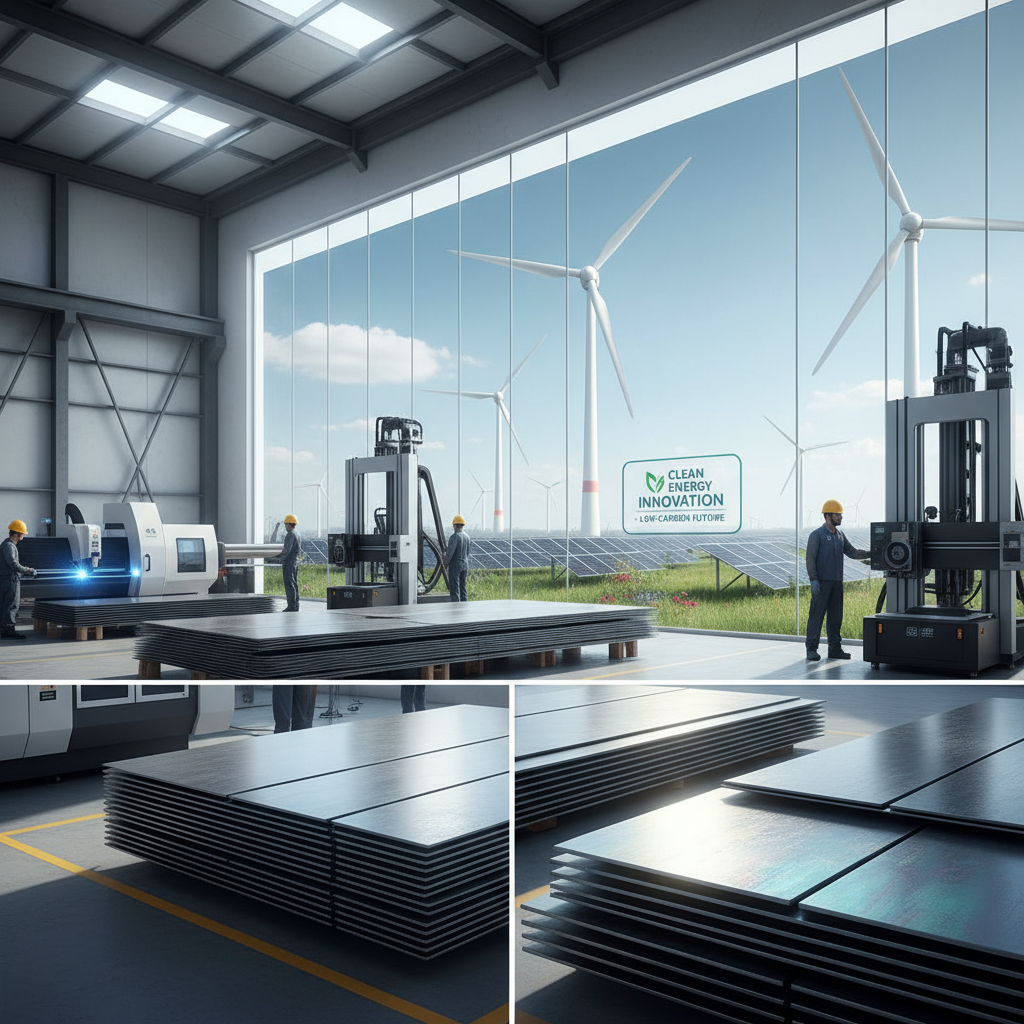
The “Green Layer” concept highlights laminated steel’s role in advancing sustainability within the energy sector by improving efficiency and supporting low-carbon manufacturing processes. Innovations such as high-silicon content alloys, grain-oriented processing, and insulating coatings minimize energy dissipation and eddy current losses, enhancing electromagnetic performance critical to clean energy infrastructure. Moreover, emerging production techniques—such as additive manufacturing and precision laser cutting—are enabling more complex and cost-effective component designs tailored for renewable energy applications.
Laminated steel’s environmental credentials are strengthened by the adoption of low-carbon steelmaking technologies, including electric arc furnaces powered by renewable energy, green hydrogen reduction methods, and carbon capture and storage (CCUS). These advancements reduce the embodied carbon footprint of laminated steel products, aligning with global decarbonization goals and supporting green building certifications. Its durability, corrosion resistance, and recyclability further contribute to lifecycle sustainability, making it a preferred material in clean energy infrastructure despite ongoing challenges related to energy-intensive production and raw material costs.
Despite its advantages, laminated steel production faces significant challenges, including high energy consumption, regulatory pressures, and the complexity of achieving full decarbonization in steelmaking. Additionally, managing internal stresses and potential environmental impacts from coatings require careful control during manufacturing. Nonetheless, ongoing research and development continue to drive performance improvements and sustainability innovations, positioning laminated steel as a cornerstone material in the global transition toward greener energy and electric mobility.
Background
Laminated steel, a composite material consisting of alternating layers of different metals, has a long-standing history and multifaceted applications across various industries. Historically, laminated steel blades were crafted from layered steels to combine differing properties such as hardness and flexibility, addressing limitations of early smelting methods that produced inconsistent steel quality. This technique persists today in specialty knives and cutting tools, where layered structures not only enhance mechanical performance but also provide aesthetic patterns through methods like pattern welding. Modern laminated steel extends beyond blades into numerous sectors due to its advantageous mechanical and chemical properties. The layering process typically involves combining hard and soft metals, resulting in a material that is simultaneously tough, corrosion-resistant, and capable of maintaining sharpness or structural integrity under heavy use. In addition to mechanical robustness, laminated steel sheets are widely employed in electrical applications where their unique magnetic properties are exploited. For instance, electrical steels are laminated to reduce eddy current losses by insulating stacked sheets from one another, while silicon content and grain orientation optimize magnetic permeability and reduce energy dissipation in motor and transformer cores.
The fabrication process of laminated steel has evolved to emphasize sustainability and environmental considerations. Laminated metals often feature coatings or films that not only protect against corrosion and abrasion but also provide advanced functionalities such as scratch resistance, antimicrobial properties, and low volatile organic compound (VOC) emissions. These innovations cater to sectors including healthcare, food packaging, appliances, and clean energy infrastructure. Compared to pre-painted steel, laminated metals offer enhanced formability, design flexibility, and reduced maintenance costs, making them especially suitable for applications demanding high durability and aesthetic value.
In the context of clean energy, laminated steel plays a critical role due to its fatigue resistance and strength, which are vital for components exposed to cyclic loads such as wind turbine parts. Advanced steel production techniques focusing on clean steel with controlled inclusions improve fatigue limits and reliability in renewable energy equipment. Additionally, the integration of laminated steel in the restoration and enhancement of historic structures, as well as new construction projects requiring sustainable materials, highlights its versatility and importance in advancing green building practices.
The Green Layer Concept
Laminated steel, often referred to as electrical steel or lamination steel, plays a pivotal role in advancing clean energy technologies by significantly enhancing the efficiency and sustainability of electrical devices used in renewable energy systems. This material is composed of multiple thin sheets of steel, each coated with an insulating layer to minimize eddy current losses when stacked together, which is crucial for reducing energy waste in motors, generators, and transformers. The unique layered structure, achieved by alternating layers of hard and soft metals, imparts both toughness and optimal magnetic properties, making laminated steel ideal for applications demanding high electromagnetic performance.
The core advantage of laminated steel lies in its high silicon content, which increases electrical resistance and reduces hysteresis losses, thereby improving magnetic permeability and reducing energy dissipation during magnetization cycles. Grain-oriented processing further enhances these magnetic properties in preferred directions, allowing for faster magnetization and demagnetization cycles essential to the performance of renewable energy machinery. To preserve these properties, manufacturing techniques emphasize minimizing mechanical stress, precise cutting to avoid burrs, and maintaining the quality of insulating coatings between laminations.
Recent advancements in manufacturing processes such as laser cutting, precision stamping, and additive manufacturing (3D printing) are revolutionizing the production of laminated steel components by enabling complex geometries, improved consistency, and cost-effective volume production. Additive manufacturing, in particular, offers design flexibility that traditional stamping methods cannot achieve, potentially allowing laminated steel to be used in more demanding environments and applications within the renewable energy sector. These innovations support the growing demand for more efficient electrical devices driven by the expansion of wind turbines, solar panel arrays, and electric vehicles.
Environmental sustainability is a key aspect of the Green Layer concept. Laminated steel can be produced with increasing amounts of recycled scrap and through emerging low-carbon steelmaking technologies such as electric arc furnaces powered by renewable energy, green hydrogen direct reduction, and carbon capture and storage (CCUS). These supply-side improvements contribute to lowering the embodied carbon footprint of laminated steel, making it a critical material for ESG-focused markets and green building certifications. Its corrosion resistance and long service life further enhance its sustainability credentials by reducing maintenance needs and supporting rapid deployment of renewable infrastructure.
Applications in Clean Energy
Laminated steel plays a pivotal role in advancing clean energy technologies through its diverse applications in renewable infrastructure and energy-efficient systems. One of the primary uses of laminated steel is in the construction of corrosion-resistant, pre-finished panels that are integral to renewable energy installations and sustainable buildings. These panels contribute to reducing maintenance needs and enable rapid deployment of clean energy projects, enhancing overall system reliability and cost-effectiveness.
In wind energy, steel is fundamental to the fabrication of key turbine components such as towers, nacelles, and rotor blades. The towers, typically made from tubular steel, provide essential structural strength to withstand high wind loads and adverse weather conditions. As turbines increase in size and power output—ranging from 7 to 12 MW in new-generation offshore farms—steel’s high-strength properties are critical for supporting taller, more durable structures and heavier nacelles. Furthermore, steel accounts for approximately one-third of the total weight of onshore wind turbines and is used extensively in shafts, drive trains, and gearboxes, highlighting its indispensable role in wind power generation.
Electrical steel laminations are crucial components in the motors, generators, and transformers that form the backbone of renewable energy systems. These laminations, composed of thin layers of specialized steel alloys, enable efficient conversion and transmission of electrical energy by minimizing eddy current losses and improving thermal management. This efficiency is especially vital in applications such as traction motors for electric vehicles (EVs) and renewable energy generators, where performance and energy conservation are paramount. The demand for electrical steel laminations is rising in tandem with the expansion of electric mobility and renewable power infrastructure, ensuring that laminated steel remains central to future clean energy technologies.
Hydropower systems also benefit from steel’s versatility and strength, using it to reinforce dams and turbines that have long been foundational to global renewable energy production. Additionally, advanced steel alloys capable of withstanding extreme conditions, such as liquid hydrogen storage at cryogenic temperatures, are enabling the development of future hydrogen energy systems. These innovations extend the role of steel beyond traditional renewable sources and into emerging clean energy technologies.
The integration of laminated steel with low-carbon steelmaking technologies—such as electric arc furnaces using scrap, renewable energy-powered production, green hydrogen direct reduction, and carbon capture and storage (CCUS)—further reduces lifecycle emissions associated with appliances, construction modules, and EV ecosystems. This alignment supports green building certifications and national decarbonization goals, reflecting the material’s evolving contribution to sustainability in clean energy applications.
Advantages Over Traditional Materials
Laminated steel offers several significant advantages over traditional construction and manufacturing materials, positioning it as a key player in the transition toward sustainable and clean energy technologies. One of the primary benefits is its enhanced sustainability profile. When combined with low-carbon steelmaking routes—such as electric arc furnace (EAF) processes utilizing scrap steel, renewable power, green hydrogen direct reduced iron (DRI), and carbon capture, utilization, and storage (CCUS)—laminated steel can substantially reduce lifecycle greenhouse gas emissions compared to conventional steel and concrete materials. This reduction in embodied carbon makes laminated steel a practical choice for applications aiming to meet green certifications and align with national decarbonization pathways.
From a material efficiency and waste reduction perspective, laminated steel benefits from superior manufacturing processes that promote tighter quality control and lower labor intensity. These factors contribute to less material waste and enhanced sustainability throughout the product lifecycle. Furthermore, the lamination process itself improves the mechanical and corrosion resistance properties of the steel, producing surfaces that resist corrosion and are easier to clean, which is especially advantageous in demanding environments such as healthcare, hospitality, and residential settings. This corrosion resistance, coupled with high strength gained from the layering technique, enables laminated steel to endure heavy equipment usage and harsh conditions better than many traditional materials.
In addition to structural advantages, laminated steel exhibits enhanced electrical and magnetic properties that are vital for clean energy applications. Its lamination reduces eddy current losses in electrical devices such as transformers, motors, and generators, thereby increasing energy efficiency and performance. High silicon content and grain-oriented processing further optimize its magnetic permeability while minimizing energy loss, making laminated steel indispensable for modern energy systems. Advancements in insulation coatings and precision manufacturing techniques—like laser cutting and stamping—have further refined the performance and customization of laminated steel components for specific design needs.
Moreover, the use of laminated steel in serial production enables modular construction approaches, such as prefabricated façades, interior panels, and sanitary modules, accelerating project timelines while maintaining consistent quality and sustainability standards. This versatility, combined with the material’s durability and lower environmental impact compared to traditional concrete and virgin steel, underscores laminated steel’s growing prominence as a green alternative in the built environment and clean energy infrastructure.
Challenges and Limitations
The production of laminated steel faces significant challenges related to its high energy consumption and environmental impact. Energy costs constitute approximately 28% of total production expenses as of 2024, making it a major restraint for manufacturers aiming to implement more energy-efficient processes. Additionally, stringent environmental regulations, especially in regions like the EU and North America, have compelled around 42% of producers to invest heavily in pollution control systems, which has increased production costs by nearly 12% per ton. These factors contribute to the complexity of balancing economic viability with sustainable manufacturing practices.
Decarbonization remains a critical limitation for the steel industry as the traditional steelmaking process relies heavily on coal and coke both as energy sources and reductants, rendering total decarbonization of existing plants currently unfeasible. Although a portfolio of technologies such as carbon capture and storage (CCS) and other approaches is being developed to mitigate emissions, the transition is gradual and demands substantial investment and innovation. Furthermore, the fluctuating costs of raw materials like iron ore and thermal coal, alongside energy market volatility, impact the overall cost structure of laminated steel production, complicating efforts to reduce the carbon footprint while maintaining competitiveness.
Material properties and production intricacies also pose limitations. For instance, while laminated steel benefits from corrosion resistance and high strength due to its layered structure, managing internal stresses during mechanical loading remains challenging. The brittle internal layers typically endure less tensile stress, but the complex interplay of strain transfer, crack deflection, and interfacial delamination requires precise control during fabrication to prevent premature failure. Additionally, the inclusion of coatings such as pre-painted steel introduces environmental concerns related to volatile organic compound (VOC) emissions during manufacturing.
From a lifecycle perspective, the environmental assessment of laminated steel production must consider the embodied carbon and energy in raw materials and processing, which significantly contribute to overall greenhouse gas emissions. Although laminated steel presents substantial growth opportunities in renewable energy and electric vehicle sectors, overcoming these challenges is essential to fully realize its potential as a clean energy enabler.
Current Research and Development
Research and development efforts in laminated steel are increasingly focused on enhancing sustainability and meeting the growing demand from clean energy sectors. With the imperative to reduce carbon emissions and improve energy efficiency, lightweight and low-carbon steel materials have become a priority within materials science research. Innovations are being driven by the integration of advanced manufacturing techniques such as additive manufacturing or 3D printing, which enable greater design flexibility, cost-effectiveness, and the production of complex steel components optimized for renewable energy applications.
The steel industry is actively pursuing technologies to lower its carbon footprint, including carbon capture, utilization, and storage (CCUS), as well as energy efficiency improvements. Major organizations like the World Steel Association and the International Energy Agency emphasize the importance of hydrogen-based steelmaking, carbon capture and storage (CCS), and carbon capture and utilization (CCU) as vital pathways to achieve emissions reductions in steel production. These innovations are aligned with emerging national roadmaps and corporate sustainability programs that support low-CO2 steelmaking routes, such as electric arc furnaces using scrap metal, renewable energy integration, and green hydrogen direct reduced iron (DRI) processes.
Laminated steel itself is evolving to meet the requirements of emerging clean energy applications. Specialty laminated variants with electrical insulation, heat resistance, and enhanced formability are being developed to support electric vehicle (EV) battery enclosures, motor housings, and modular construction components that demand noise reduction and thermal management. Concurrently, process innovations aim to improve yield, uniformity, and reduce waste in thin-gauge laminates, thereby enhancing cost efficiency and sustainability.
Moreover, research is exploring advanced coatings and films that provide antimicrobial, scratch-resistant, and low-volatile organic compound (VOC) properties, broadening the applicability of laminated steel in appliances, healthcare, and food packaging sectors linked to clean energy infrastructure. Environmental impact assessments adhere to standardized guidelines such as ASTM E2921-22 and EN 15978, with studies using reference service periods (RSP) of up to 75 years to ensure comparability and sensitivity analyses that reflect realistic product lifetimes.
As the renewable energy industry expands, steel fabrication remains essential for manufacturing components used in wind turbines, solar technology, and other alternative energy equipment. The synergy between steel innovation and clean energy technology continues to propel the development of advanced laminated steel products that are both high-performance and environmentally responsible. This convergence of material science, manufacturing technology, and sustainability goals positions laminated steel as a cornerstone in the transition to a greener energy future.
Future Prospects
The future of laminated steel is closely intertwined with the accelerating transition to clean energy and electric mobility, positioning it as a vital material for next-generation applications. Growth opportunities are particularly strong in renewable energy infrastructure and electric vehicles (EVs), where laminated steel’s unique combination of high strength, durability, electrical insulation, and lightweight characteristics meet evolving industry demands.
In the renewable energy sector, laminated steel contributes to the development of corrosion-resistant, pre-finished panels used in solar panels, wind turbines, and energy-efficient building envelopes, enabling rapid deployment and reducing maintenance costs
Environmental Impact and Lifecycle Assessments
Life Cycle Assessment (LCA) serves as a critical method for evaluating the environmental impacts of construction materials throughout the entire lifespan of a building, from raw material extraction to end-of-life processes. In the context of comparing laminated steel with alternative materials, such as mass timber, LCA provides insights into embodied carbon and other greenhouse gas (GHG) emissions associated with manufacturing, transportation, construction, operation, and demolition phases.
Mass timber buildings, which utilize wood products like glue-laminated timber (glulam), plywood, and solid wood panels as primary structural elements, have been demonstrated to reduce carbon emissions relative to functionally equivalent steel and concrete structures. One case study highlighted a 19% reduction in carbon emissions for mass timber buildings compared to steel structures within building modules A1 to A4, largely due to lower embodied carbon in timber and the significant carbon storage capacity of wood materials—amounting to approximately 2757 tonnes of CO₂ equivalent stored during the building’s lifespan. This carbon storage acts as a delay in emissions release, offering additional climate benefits over time.
Conversely, steel remains one of the most widely used construction materials worldwide, prized for its strength, durability, and recyclability. Modern steel production often incorporates recycled materials, which can reduce its environmental footprint. Steel’s versatility and resilience make it suitable for renewable energy applications such as wind turbine and solar panel structures, where it endures challenging environmental conditions. The recycled steel used in construction projects maintains essential physical and chemical properties necessary for long-lasting structural performance while contributing to sustainability goals through material reuse.
However, the embodied carbon associated with steel—including emissions from raw material extraction, processing, and manufacturing—can be significant. Despite this, comprehensive comparative analyses that address temporal variations in emissions and the effectiveness of carbon mitigation strategies across a building’s life cycle remain limited. Understanding these factors is essential for optimizing the selection of materials in clean energy infrastructure and institutional buildings, where balancing durability and environmental impact is crucial.
The content is provided by Avery Redwood, Brick By Brick News